Business Plan Support

Why is a Business Plan Important?
A business plan isn’t just for securing funding, it’s a practical tool that helps business owners put their ideas on paper and map out their strategies. It acts as a roadmap, guiding how the business is structured, operated, and grown over time. Whether you’re just starting out or already up and running, a business plan helps clarify goals and outline the steps to reach them. It’s a living document that evolves with your business and supports decision-making at every stage.
Why use our Business Plan Guide?
There are lots of business plan templates available, but our guide was designed with entrepreneurs, investors, and funders in mind. It’s straightforward, practical, and helps you organize your ideas clearly. Many of our clients have used this guide to successfully secure funding, and we’ve received positive feedback from financial institutions on its structure and completeness. This guide is meant to support your planning process, so feel free to adjust or remove any sections that don’t apply to your business. While it’s not mandatory to use our guide, please note that the Regional Business Centre uses it when reviewing business plans with clients to ensure all key sections are covered. It’s also recommended for participants in the Starter Company Plus program when preparing their business plan.
Business Plan Tips
Although the executive summary generally appears first, it should be written last. You cannot summarize things that haven’t been written yet! Also, your executive summary should be catered to the reader. It serves to grab the reader’s attention and compel him/her to learn more about your business.
Highlight important key points in the first few sections of your plan. The reader should not be finding out about major business decisions near the end of your plan, which could be related to your business model, staffing model, key concepts, major product or service offerings.
Assume the reader knows nothing about your business or industry. For example, try to spell out acronyms the first few times they are used.
Spelling and grammar is important. Remember to use spell check and to review your grammar. Free tools like Grammarly can help.
Remember to include some appendices such as job descriptions, CVs of the owner(s), restaurant menus, large inventory and price lists
.


Our Next Business Plan Webinar
The Regional Business Centre hosts a 5 part webinar series on entrepreneurship. Many of the topics including Market Research and Creating a Business Plan will be beneficial to you as you create your business plan. Take a look at our events calendar for the next available webinar.
Why Market Research is Important
Investors and funders want to validate your business idea, and having a representation of the total available market will help influence their decision. Market research also helps you understand who your customers are, how to reach them effectively, and what products or services they truly want.
Don’t rely solely on AI or Google. Always verify, list and link your sources.
Combine both primary research (surveys, reviews, interviews) and secondary research (data from trusted sources) in your findings. Include relevant statistics throughout your plan, including your executive summary.
Want to view some market research data resources? Visit our Tools and Resources page.


Business Plan Financials
At a minimum, your business plan should include a startup budget and 2 years of sales and expenses projections in a cashflow format. You may also choose to include an income statement and a balance sheet to provide a more complete financial outlook. To make this easier, we offer an Excel financial template that includes pre-formatted formulas to help you calculate everything efficiently.
Be sure your financials include all ongoing and one-time expenses referenced in your plan, from equipment and marketing costs to recurring costs like employee wages, insurance, subscriptions and memberships. Keep these figures consistent across every section of your plan.
Underestimates revenues and overestimates costs. This will give a bit of a buffer and allow for more conservative financial forecasting.
The BDC has a tool to help calculate the costs of the business loan you need and to see the monthly amortization schedule. Try the loan calculator here.

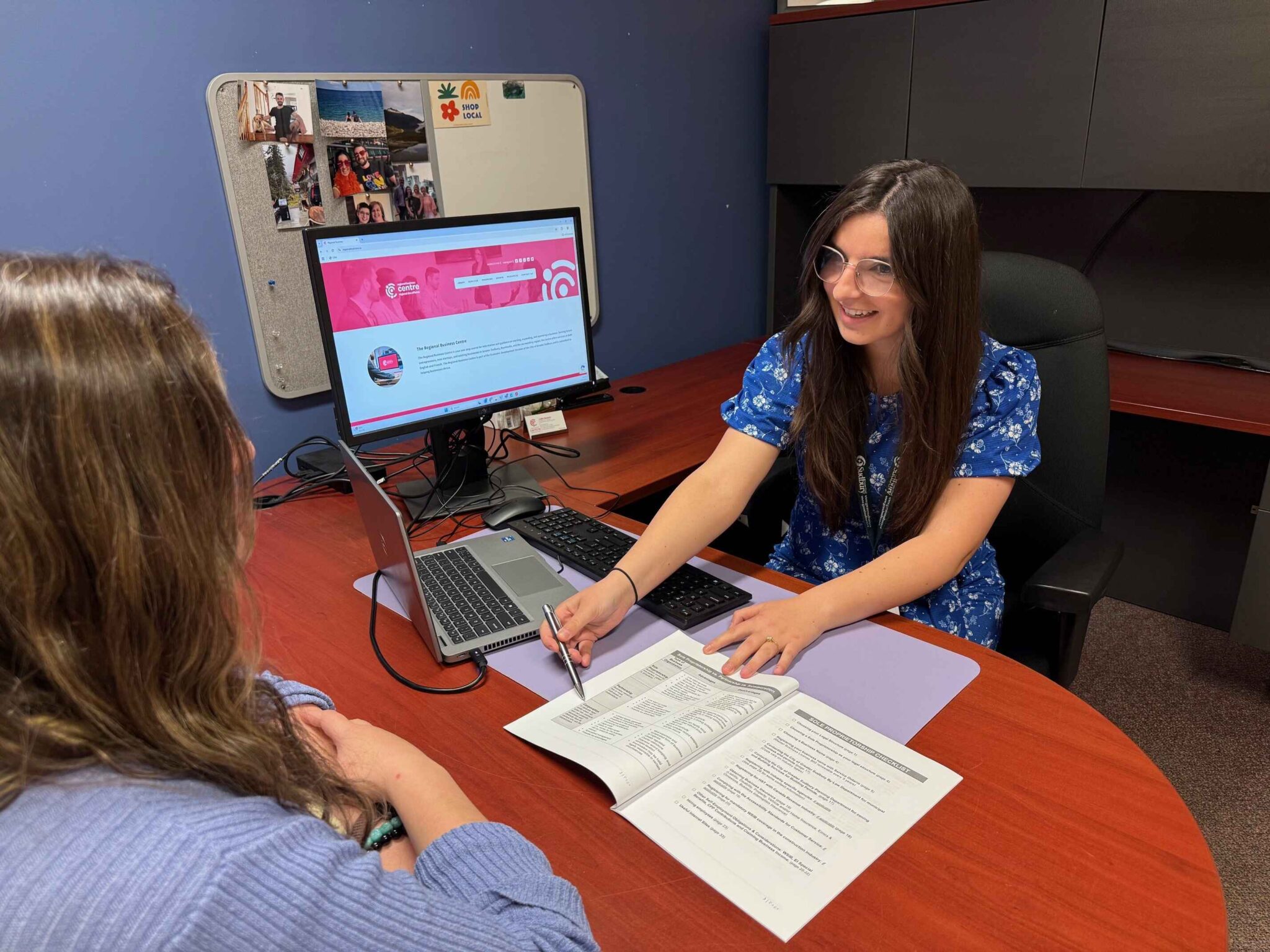
Book a free market research meeting or business plan review with our team.
In our market research discovery session, we’ll help you identify your market research needs, such as customer demographics, industry trends, local spending habits, or competitor insights. After the meeting, staff will email you relevant data and resources available.
In our business plan consultation can include tips and tools to strengthen your strategy and improve your chances of success. Following this discussion, a secondary meeting may be booked to review your business plan.